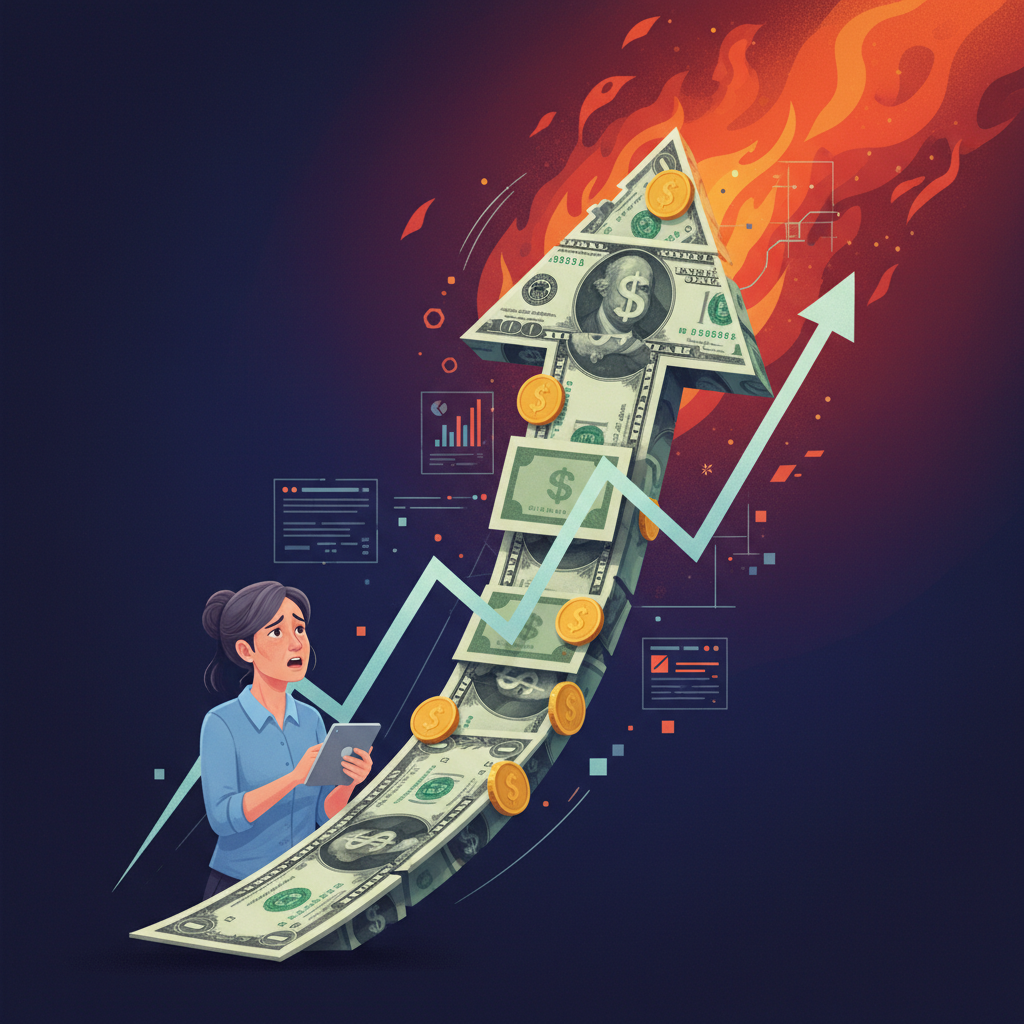
Rising customer acquisition costs in digital advertising illustrated with upward trending costs

The Rising Cost of Customer Acquisition: How SMB E-Commerce Brands Can Fight Back in 2026

By Brennan Lunin, Founder at BL Adworks

Customer acquisition costs for e-commerce brands have risen roughly 60% over the past five years. The average cost to acquire a new e-commerce customer now sits between $45 and $85, depending on your industry and channel mix. For small and mid-sized brands, this trend threatens profitability and makes scaling feel impossible.

But rising CAC is not a death sentence. The brands that thrive in 2026 are the ones that reduce their dependence on paid acquisition and build systems that make every customer worth more over time.

Seven strategies have consistently moved the needle for the brands we work with.

Why Customer Acquisition Costs Keep Rising

To fight rising CAC effectively, here is what is actually driving it:

  • More competition for the same ad inventory. The number of e-commerce stores in the U.S. exceeded 2.8 million in 2025 (U.S. Census Bureau). More advertisers bidding on the same platforms drives up cost per click.
  • Privacy changes reduced targeting precision. Apple’s iOS 14.5 App Tracking Transparency update in 2021 fundamentally changed how Meta and other platforms track users. Less precise targeting means more wasted spend reaching the wrong people.
  • Platform algorithm shifts. Both Google and Meta are pushing toward AI-driven campaign types (Performance Max, Advantage+) that optimize for volume, sometimes at the expense of efficiency for smaller budgets.
  • Consumer expectations have risen. Free shipping, easy returns, and fast delivery are now baseline expectations, not differentiators. Meeting these expectations increases your cost per order.
  • Ad fatigue across platforms. Consumers see an estimated 6,000-10,000 ads per day (Forbes, 2023). Breaking through that noise requires better creative, which costs more to produce.

Average CAC by Channel

Channel Average CAC Trend (YoY)
Meta Ads (Facebook/Instagram) $45 – $75 Up 15-20%
Google Ads (Search/Shopping) $35 – $65 Up 10-15%
TikTok Ads $30 – $55 Up 25-30%
Email Marketing $5 – $15 Stable
Organic Search (SEO) $10 – $25 Stable
Referral Programs $15 – $30 Stable

Notice the pattern: paid channels are getting more expensive while owned channels (email, organic, referrals) remain stable. This is the core insight behind every strategy below.

Strategy 1: Maximize customer lifetime value

The most powerful lever against rising CAC is not reducing acquisition cost — it is increasing how much each customer is worth. A customer who buys three times is effectively acquired at one-third the cost.

How to increase LTV:

  • Build post-purchase email flows that drive repeat purchases within 30, 60, and 90 days
  • Launch a loyalty or rewards program (even a simple points system)
  • Create subscription options for consumable products
  • Cross-sell and upsell through targeted email campaigns
  • Deliver exceptional post-purchase experiences (packaging, follow-up, support)

Benchmark: A healthy LTV:CAC ratio is 3:1 or higher. If your ratio is below 3:1, focus on LTV improvement before increasing ad spend. A 5% increase in customer retention can boost profits by 25-95% (Bain & Company).

Strategy 2: Build an Email Revenue Engine

Email marketing delivers the lowest CAC of any channel and typically generates 25-40% of total e-commerce revenue for well-optimized stores. Yet many SMB brands treat email as an afterthought.

Essential email flows that reduce effective CAC:

  • Welcome series: 45-50% open rates, 8-12% conversion rates. Turns subscribers into first-time buyers without additional ad spend.
  • Abandoned cart: Recovers 10-15% of abandoned carts. At a 70%+ cart abandonment rate, this represents significant recovered revenue.
  • Post-purchase: Cross-sells and upsells to existing customers at near-zero marginal cost.
  • Win-back: Re-engages lapsed customers who are cheaper to reactivate than to replace.

Every dollar of revenue generated through email lowers your blended CAC because it did not require incremental ad spend.

Strategy 3: Improve Your Conversion Rate

If your website converts at 2% instead of 3%, you need 50% more traffic to generate the same number of customers — effectively increasing your CAC by 50%.

High-impact CRO improvements:

  • Page speed: A 1-second delay in load time reduces conversions by 7% (Deloitte). Compress images, use a CDN, minimize scripts.
  • Mobile optimization: 79% of Shopify traffic is mobile. If your mobile experience is poor, you are losing most of your traffic.
  • Social proof: Product reviews increase conversion by 270% for higher-priced products (Spiegel Research Center). Display reviews prominently on product pages.
  • Checkout simplification: Every additional step in checkout loses 10-15% of buyers. Enable guest checkout, minimize form fields, offer multiple payment options.

CRO is a force multiplier — it makes every dollar of ad spend work harder.

Strategy 4: Diversify Your Acquisition Channels

Over-reliance on a single platform is both risky and expensive. If 80% of your revenue comes from Meta Ads, you are one algorithm update away from a crisis.

Channel diversification roadmap:

  1. Start with your strongest platform (Google or Meta)
  2. Add the complementary platform once you hit stable ROAS on your primary
  3. Build organic/SEO as a long-term traffic source with declining marginal cost
  4. Test emerging channels (TikTok Shop, YouTube Shorts, Pinterest) with 10-15% of budget
  5. Invest in referral and affiliate programs for performance-based acquisition

Diversification lowers your blended CAC because each channel contributes customers at different cost levels.

Strategy 5: Invest in Organic Search and Content

Organic traffic has a high upfront cost (content creation) but a declining marginal cost over time. A blog post that ranks on Google can drive traffic for years at no incremental cost, compared to a Meta ad that stops generating clicks the moment you stop paying.

E-commerce SEO priorities:

  • Optimize product page titles and descriptions for search terms
  • Build content around buyer questions (“best [product] for [use case]”)
  • Implement proper schema markup for products, reviews, and FAQs
  • Build internal linking structures that connect related products and content

SEO will not replace paid advertising, but it creates a baseline of traffic that lowers your overall CAC over time.

Strategy 6: Launch a Referral Program

Referral programs convert at 3-5x higher rates than other acquisition channels because referred customers arrive with built-in trust. The average referral CAC is $15-$30 — often 50-70% cheaper than paid advertising.

Simple referral program structure:

  • Offer a discount or credit to both the referrer and the new customer (“Give $15, Get $15”)
  • Make sharing frictionless (one-click share links via email, SMS, social)
  • Promote the program in post-purchase emails when satisfaction is highest
  • Track and reward your best advocates

Customers acquired through referrals also tend to have 16-25% higher lifetime value than those acquired through paid channels (Journal of Marketing, 2023).

Strategy 7: Optimize Your Ad Creative Ruthlessly

Creative quality is the single biggest lever for paid ad efficiency. The same audience with the same targeting can see wildly different CAC depending on the ad creative shown.

Creative optimization framework:

  • Test 5-10 creative variants per campaign. Not just different images — different angles, hooks, formats (video vs. static vs. carousel).
  • Refresh creative every 2-3 weeks. Ad fatigue sets in fast on Meta. Monitor frequency metrics and rotate before performance declines.
  • Use UGC-style content. User-generated content delivers 29% higher conversion rates than branded content (Stackla, 2023). It feels authentic and stops the scroll.
  • Test hooks aggressively. The first 3 seconds of a video ad determine whether someone watches or scrolls. Test multiple hooks for every concept.
  • Kill underperformers quickly. Give each creative 3-5 days and sufficient spend to judge, then kill anything below your CAC threshold.

The Math That Matters: CAC vs. LTV

Rising CAC is only a problem if your LTV does not keep pace. Here is how to think about the relationship:

LTV:CAC Ratio What It Means Action
Below 1:1 You lose money on every customer Stop spending until you fix unit economics
1:1 – 2:1 Barely profitable or unprofitable Focus on improving LTV through retention and AOV
3:1 Healthy and sustainable Scale acquisition spend gradually
5:1+ Very efficient — possibly underinvesting in growth Increase acquisition spend to capture more market share

Many brands focus obsessively on reducing CAC when the bigger opportunity is increasing LTV. Doubling your customer’s lifetime value has the same economic impact as cutting CAC in half — but it is often easier to achieve.

Frequently Asked Questions

What is a good customer acquisition cost for e-commerce?

It depends on your margins and LTV. As a rough benchmark, your CAC should be no more than one-third of your customer lifetime value (a 3:1 LTV:CAC ratio). For most SMB e-commerce brands, a blended CAC of $30-$60 is typical in 2026.

How do I calculate my actual CAC?

CAC = Total Marketing Spend ÷ Number of New Customers Acquired. Include all marketing costs: ad spend, agency fees, creative production, email platform costs, and any tools used for acquisition. Divide by new customers only (not repeat purchases).

Is email marketing really that effective at reducing CAC?

Yes. Email-generated revenue comes at near-zero incremental cost (you are reaching people already in your database). When email drives 25-40% of your total revenue, it dramatically lowers your blended acquisition cost across all channels.

Should I stop advertising if my CAC is too high?

Not necessarily. First, check whether the issue is CAC or LTV. If your CAC is $60 but your LTV is $200, you are still profitable. Focus on improving the ratio rather than cutting spend entirely. Pausing ads often causes revenue to drop faster than costs.

How long does it take to reduce CAC with these strategies?

CRO and creative optimization can show results within 2-4 weeks. Email flow improvements take 30-60 days to show impact. SEO and referral programs are longer-term plays (3-6 months). Start with the fastest-impact strategies and build the others in parallel.

Fight Back Against Rising Costs

Rising CAC is a structural trend, not a temporary blip. The brands that win are not the ones spending the most — they are the ones spending the smartest. Build your email engine, optimize your conversion rate, diversify your channels, and maximize the value of every customer you acquire.

Ready to lower your acquisition costs and scale profitably? Request a free audit — if your CAC is climbing and you want a fresh look at where the real leverage is, we will tell you which channels and retention levers to prioritize.

Related Articles

Continue growing your e-commerce business with these related guides:

Similar Posts

Leave a Reply

Your email address will not be published. Required fields are marked *