Abandoned Cart Recovery: The Timing, the Filters, and Why You Should Not Lead With a Discount
By Brennan Lunin, Founder at BL AdWorks
Roughly seven in ten carts get abandoned. That figure is real and you can check it: Baymard Institute aggregates dozens of studies and puts the average around 70%.
More useful than the number is the reason. Baymard’s checkout research consistently finds that the leading cause is unexpected extra cost at checkout, shipping, tax, and fees. Not indecision. Not price. The surprise.
That changes what the recovery email is for.
The cart abandon flow
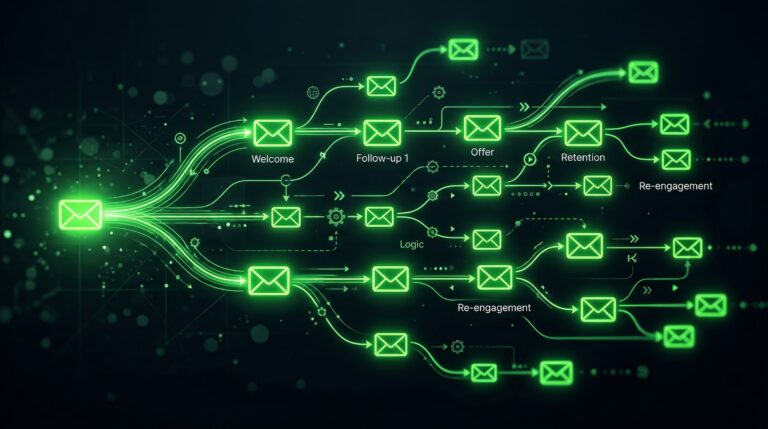
Three emails over 48 hours, fired on Added to Cart.
Email 1, about an hour in. A reminder with the cart contents in it. No discount. Most of the people who open this were distracted, not deterred, and they will finish the order because you made it easy to get back.
Email 2, roughly 24 hours. Answer the objection. Since the most common one is cost at checkout, say the shipping number out loud here rather than making them discover it again. If you have a return policy that removes risk, this is where it goes.
Email 3, roughly 48 hours. If you are going to use an incentive at all, it goes here, last. Not first.
Why the discount goes last, if it goes at all
Lead with a discount and you pay twice.
You pay once for the people who were going to buy anyway, and you would never know, because they buy either way and you hand them margin for nothing. You pay again, slowly, for everyone else: they learn that stalling at the cart produces a coupon. Do it long enough and you have trained your best customers to always wait. You built a discount machine and called it a recovery flow.
The first email exists to remove friction. Only the last one should try to buy the sale back.
The filters, which are the part people get wrong
The flow itself is easy. The filters are what stop it colliding with everything else you run.
- Filter against Placed Order. Obvious, and yet I have watched stores email people asking them to complete a purchase they already completed. Nothing burns trust faster.
- Filter against anyone who received this flow in the last 30 days. Otherwise your repeat browsers get the same three emails every fortnight, and they will unsubscribe, which is the correct response.
- Set checkout abandon to a higher priority than cart abandon. In Klaviyo, smart sending decides who gets what when both could fire. Most people who abandon checkout also abandoned a cart, so without a priority rule you are double-sending your highest-intent segment.
Those three filters take about ten minutes and they are the difference between a flow that works and a flow that annoys people at scale.
Cart abandon and checkout abandon are different people
Worth separating, because most stores run one flow for both.
Someone who added to cart and drifted away was thinking about it. Someone who reached checkout and stopped hit a wall: a shipping cost they did not expect, a payment method you do not accept, an address form that broke on their phone.
The first person needs a reminder. The second person needs the wall removed, or at least named. Ask them. A plain “did something go wrong at checkout?” gets replies, and the replies will tell you exactly what to fix on the page.
On SMS
SMS works for this, and it works because it is immediate. It is also the channel where being annoying costs you the most, because it arrives in the same place as their family.
Two rules I hold to. Never send an SMS for a step where an email would do. And never send both for the same trigger without a delay between them, or you have not sent a reminder, you have sent an ambush.
What I am not going to tell you
I am not going to tell you what percentage of carts you will recover.
You will see recovery rate ranges quoted everywhere, and I have gone looking for the source under them. There isn’t one. Your recovery rate depends on your traffic quality, your price point, your shipping costs, and whether the abandonment was caused by something the email can fix, and no benchmark table knows any of that about you.
The 70% number above I will stand behind, because Baymard shows their work and you can go read it.
The thing to fix before the flow
If unexpected cost is the top reason people abandon, the cart abandon flow is treating a symptom.
Put the shipping cost on the product page. Show a real delivery date. Say the return policy in one line, near the button. You will abandon fewer carts, which is worth more than recovering more of them.
The best cart abandon flow is the one that has less work to do.
Sources: Baymard Institute cart abandonment research (aggregated across dozens of studies).
Get the 6 core Klaviyo flows, free.
Welcome, browse abandonment, cart abandonment, checkout abandonment, post-purchase, win-back. Built in your Klaviyo account, by me. No cost while the first 50 spots last.
Claim your flows free →Want the whole retention system built instead? See how that works.